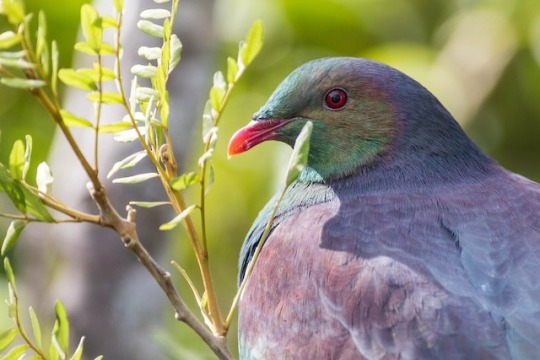
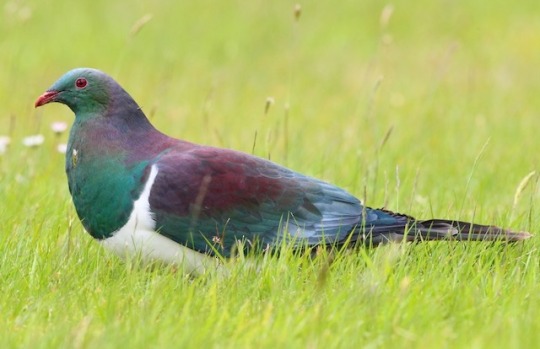
the kererū or new zealand pigeon isa fruit-pigeon native to new zealand. ‘kererū’ is an onomatopoeic name, based on their cooing vocalizations. these frugivorous birds feed mostly on peaches and introduced plums, but their love of fruit has given them a reputation for trouble. kererū often eat berries that have hung on the tree too long and fermented, causing them to become ‘drunken’ and act erratically.
They’re also one of only two surviving birds large enough to eat the fruit of several endemic trees that rely on birds to distribute their seeds, such as the tawa, so efforts to conserve them help biodiversity in more than one way. Government bodies and a citizen science NGO promote an annual Great Kererū Count, a brief period of time during which people in New Zealand are encouraged to report the time and place of any kererū sightings.
1. Ocellated Turkey. I mean you have gorgeously iridescent feathers on the rest of the bird, but blue skin and orange and pink caruncles AND a magnificent drooping snood? It’s almost too much. Sadly this photo doesn’t show the snood to its greatest glory since it’s on the other side of the beak but the rest of the display makes up for it.
2. Kokako. I mean a wattlebird has to feature somewhere, and personally, while I appreciate how outrageous the ocellated turkey is, sometimes you want elegantly understated, and the kokako has you covered there. Sleek grey feathers and deep blue wattles under the bill make a heck of a statement.
3. Southern Cassowary. The undisputed winner of “most intimidating wattles” as far as I’m concerned. I don’t want to meet these wattles in a dark alley. Or dark forest. Or anywhere without a fence between me and the wattles, to be quite honest.
4. Andean Condor. Check out the wingspan on these wattles. And unlike the cassowary, I feel like I’d love to chill in the presence of a condor. Also, I like the muted tones. It sends off much less of a “don’t fuck with me” vibe without reducing any of the magnificence.
5. Temminck’s Tragopan. I mean. Just look at it. It’s almost eyeburning in its magnificence. All the tragopans deserve recognition for their amazing achievements in fleshy face decorations, but Temminck’s just has a little extra something.
What gets me is that initial pause. The bird knows this song. He knows when the drum comes in. Being able to anticipate musical rhythm is a form of intelligence very few species have, and this is the most remarkable example of it I’ve ever seen in a bird. The cockatoo knew to wait for the drums.
rhythmic awareness: a prerequisite of language evolution
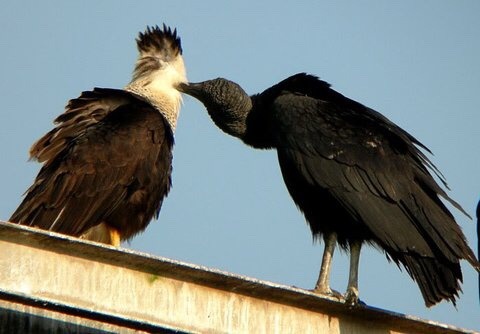
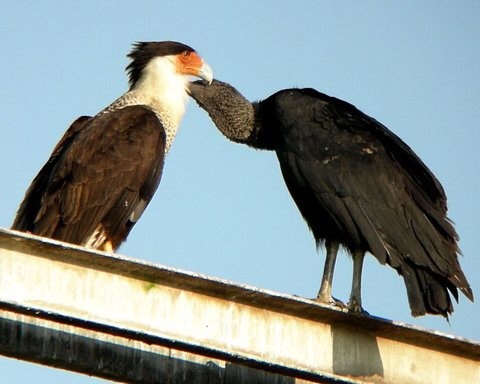
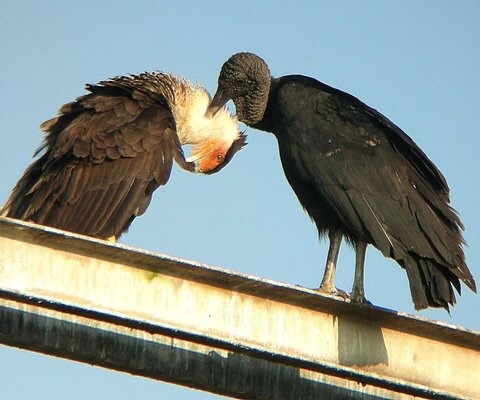
a photographer captured a wild black vulture preening a northern caracara. while this interaction may seem strange, considering the birds are not in the same family, they are both scavengers and regularly interact over meals of carrion.
The vampire finch lives on the most remote island of the Galapagos, Wolf Island.
With a diet that consists primarily of seeds and insects, vampire finches turn to blood drinking in the dry months of the year when fresh water is hard to find. The finches peck at the skin near the tail feathers of other birds, chiefly blue-footed boobies, until blood is drawn to drink. Strangely, the boobies rarely seem to notice or be disturbed by the finches’ behavior. (xxxx)








 lovingdread